
In partnership with


Two of the biggest names in AI just made opposite bets on the same product: a personal agent that works while you're not looking. OpenAI is charging for it. Meta is giving it away. Apple, meanwhile, is quietly tightening the locks on your files. Here's what that means for you.
Your SOC 2, handled end to end with AI agents.

Enterprise buyers won’t put your product near their customer data without a SOC 2 report. Twenty-one state privacy laws now hold them accountable for the vendors they share data with, so their diligence lands on you.
Sprinto gets you audit ready in 14 days, across three working sessions. AI agents connect your stack, collect the evidence auditors ask for, and close the gaps as they appear. You approve, they execute.
Sprinto also answers the security questionnaires your buyers send, using the same evidence base, so security reviews stop holding up deals.
No compliance hire. No consultant. Your auditor signs off.
OpenAI's New "Dots" Are AI Agents That Work Even When You Don't
What happened: OpenAI began rolling out Dots on September 29. Each dot is an always-on agent with its own cloud computer and web browser, and it can connect to more than 4,000 apps. It learns your preferences from feedback, works through ChatGPT and Slack and Teams, and can start on tasks before you ask. The first dot is included with ChatGPT Pro and Business Premium plans in eligible markets, and OpenAI says you control what it does through custom rules that allow, block, or require approval for specific actions. Wired also covered the launch.
Why it matters to you: This is the shift from an AI you ask to an AI you assign. Think of it as a junior assistant who watches your inbox and Slack and drafts replies. The catch is trust. An agent that can act on its own is only as safe as the permissions you give it, so the setup matters more than the sales pitch.
What to do about it: If you try one, start with a "draft only, never send" rule and review everything for the first two weeks.
Meta's Free AI Agent Hit 5 Million Downloads Faster Than ChatGPT
What happened: Meta launched its Muse agent on September 8 and passed 5 million downloads by September 30, about 22 days. By comparison, ChatGPT needed 56 days to hit that mark, Grok needed 103, and Claude needed 492, according to Yahoo Finance. Muse is free, currently limited to the US and Canada, and sits at number one on both major app stores. Meta says it will eventually take a small cut of sales made through the agent.
Why it matters to you: Free beats paid when it comes to getting millions of people to try something. If your customers start using agents to research and buy, the agent could soon be deciding which businesses it recommends. Keep an eye on how these tools pick products and services.
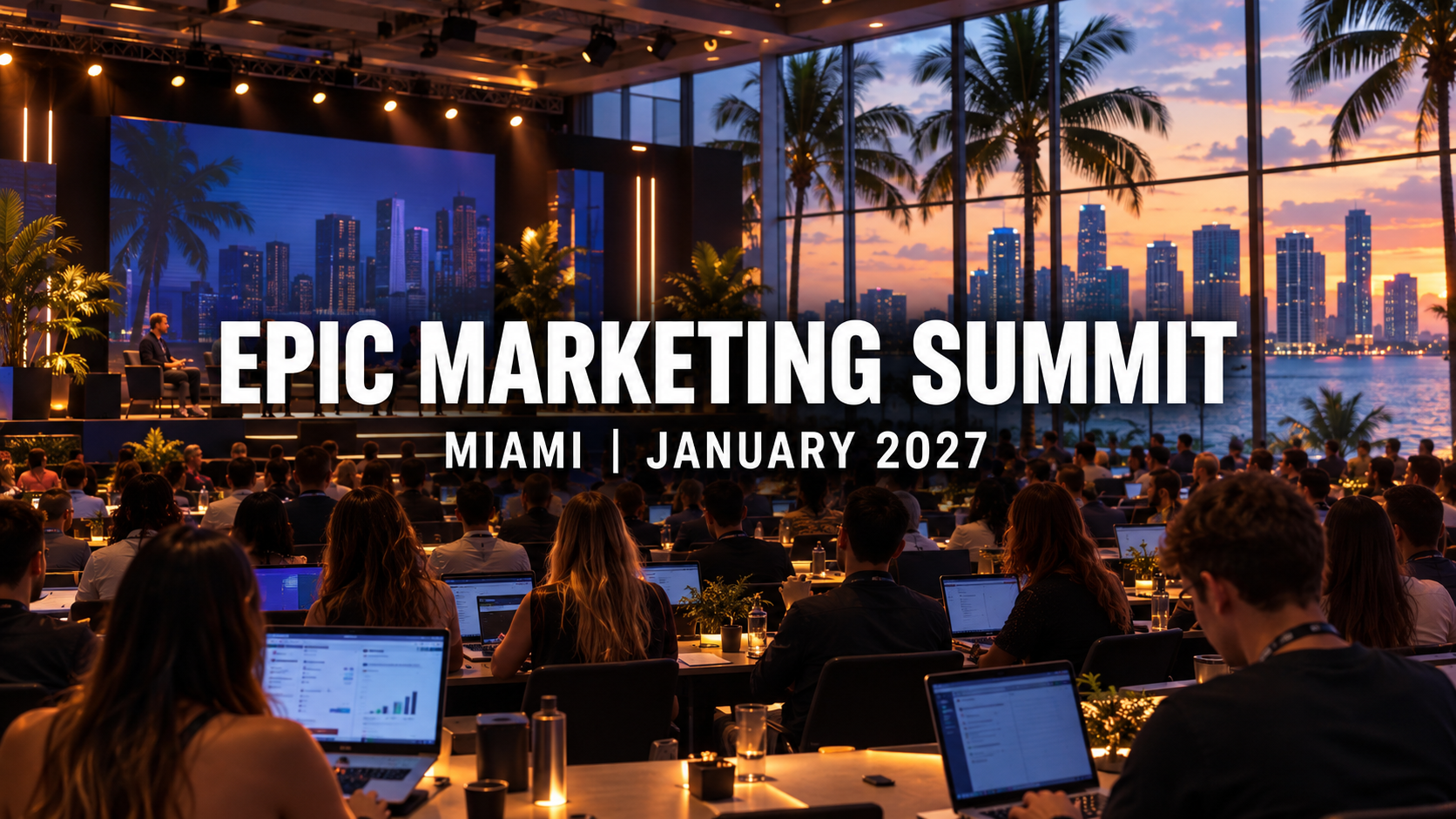
Most business owners I know have a sales process that lives in their head and runs on their own energy. When they stop, the sales stop. That is the exact problem the Epic Marketing Summit is built to fix.
It's a 2-day live event in Miami this January where you don't just take notes. You build a working AI-powered sales funnel on-site, and you vibe code your own AI app while you're there. You walk out with a finished asset, not a framework you still have to go implement on Monday. It's made for business owners who want to turn their sales process into a system instead of running it on their own time and energy. Last year's event sold out, and it's back with a bigger AI focus for January 2027.
I wasn't there last year, and I had major FOMO about it. I know a lot of the trainers, and they weren't teaching theory. They'd actually done the work. I'm going in January, and if you're serious about building leverage into how you sell, I'd like to see you there too. Grab your spot here
Apple Is Locking Down Mac File Access Because of AI Agents
What happened: Apple said it is tightening the controls around macOS Full Disk Access, the permission that lets an app see your files, messages, mail, and browsing history. Apple wants more explicit consent before an app, including an AI agent, gets that level of access. In its words, "As AI agents become increasingly capable and autonomous, the risks associated with this level of access will grow substantially." TechCrunch reported the move followed reports that Meta's Muse app read a user's private messages and a flaw in the ChatGPT Mac app that could have exposed sensitive data.
Why it matters to you: Notice the pattern. The same week agents get more powerful, the company that makes your computer says they're a risk. If you or your staff run AI apps on Macs that hold client data, this is your reminder that "easy to install" and "safe to trust" are different things.
What to do about it: Open System Settings, go to Privacy and Security, then Full Disk Access, and remove any app you don't recognize or no longer use.
a16z: AI Is Driving Most of Wall Street's Profit Growth, but Few Companies Can Prove It Pays Off
What happened: Venture firm a16z's latest State of Markets report found that tech accounted for roughly 76% of the S&P 500's earnings growth in 2026 through late August. Yet only about 2% of S&P 500 companies disclose an AI metric they track over time, and just 2% of US households paid for AI services as of April. Much of the money is flowing into hardware. The Neuron's breakdown notes that Alphabet, Amazon, Meta, Microsoft, and Oracle spent $416 billion on capital investment in 2025, with analysts estimating $777 billion for 2026.
Why it matters to you: The spending is easy to measure and the payoff is not. Big companies are betting hundreds of billions, but most can't show a number that proves AI is working. You can do better than that on a small scale by tracking one metric, like hours saved or leads handled, before you buy any tool.
Broadcom Is Raising $60 Billion in Debt to Build AI Chips for Anthropic
What happened: Bloomberg reports Broadcom has started amassing $60 billion to fund chips for Anthropic. Earlier reporting from The Next Web says the deal involves Apollo and Blackstone, and that Anthropic doesn't buy the chips outright. Investors finance the hardware and lease it to the AI company. The partnership targets more than 20 gigawatts of computing capacity for leading AI labs by 2028, following a $35 billion deal in June.
Why it matters to you: AI is now a borrowing story, not just a cash story. Leasing chips with debt is how a company grows faster than its bank account allows. That can work fine, but it also means the industry is leaning on lenders staying confident. When your AI vendor's costs depend on financing, expect pricing to shift over time.
Amazon Pledges $1 Billion to the Towns That Host Its Data Centers
What happened: On October 2, Amazon announced it will invest more than $1 billion over five years in communities near its data centers. The money covers free community college degrees and training aimed at 300,000+ students, energy and water upgrades for roughly 300 schools and community buildings and 30,000 homes (about $700 in annual savings per household), and flexible local funding for priorities each community chooses.
Why it matters to you: Data centers use a lot of power and water, and local pushback has been growing. This is Amazon trying to buy goodwill before more towns say no. If you're in a region where one is planned, expect more training programs and local hiring pipelines to show up.
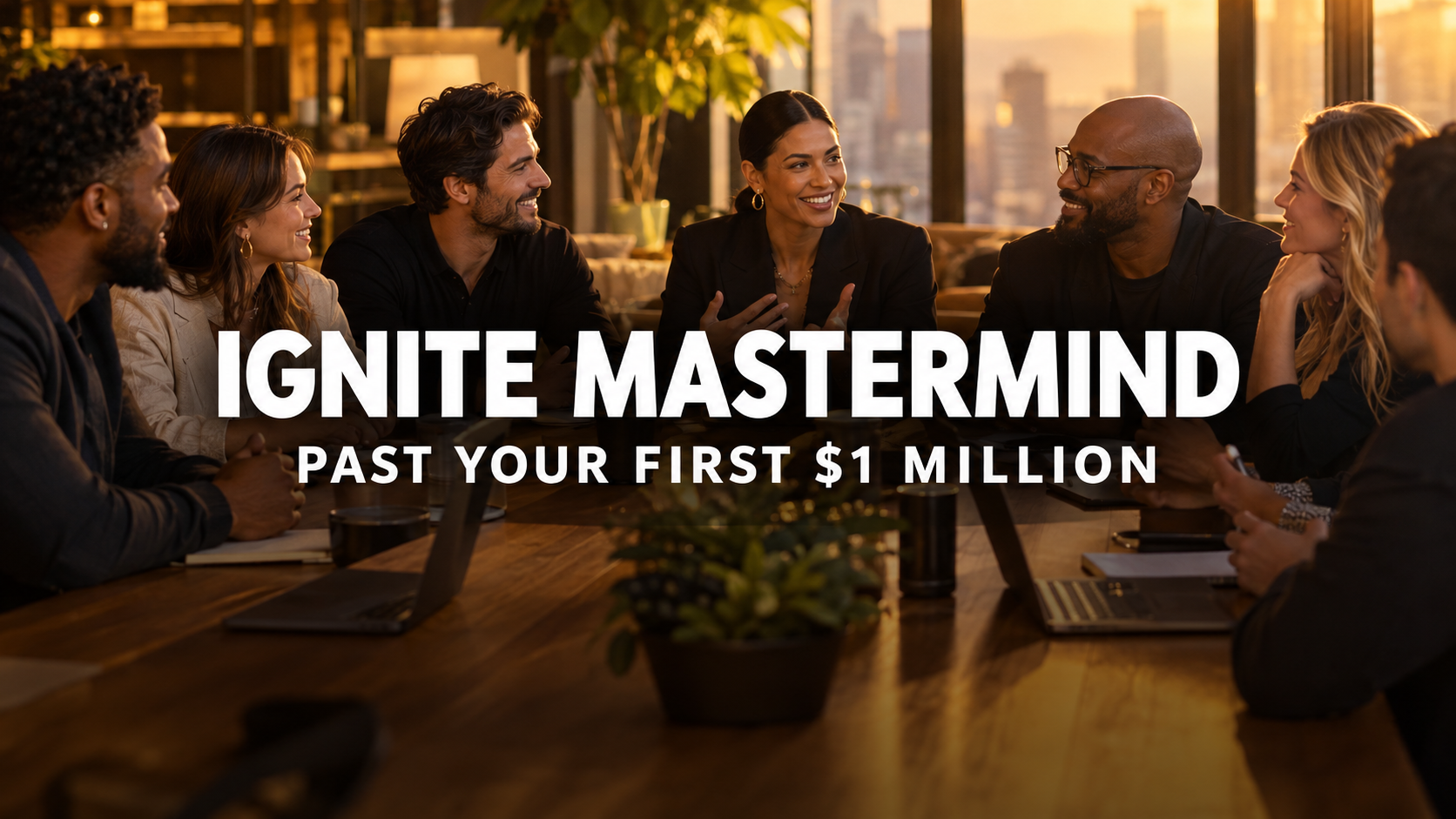
Here's a different kind of recommendation, and it comes from experience, not a sales pitch. I've been a member of the Ignite Mastermind for over 3 years, and it's been a vital part of how I've grown my business. Some of my closest friends, and a few real business partners, came directly out of being in that room.
Ignite is an annual mastermind for entrepreneurs still under $1 million a year in revenue who want structure, tools, and peers to get there faster. Membership bundles 6 to 8 live virtual workshops a year, tickets to 2 in-person multi-day live events, and weekly calls with Perry Belcher and his team. You also get an all-in-one marketing software suite that replaces over $5,000 a month in separate tools, all connected. And I add a personal bonus of monthly accountability and business development calls with me.
If you're looking for a mastermind to move you to your next milestone, this is where I'd point you. See if Ignite is right for you
Anthropic Is Spending $100 Million to Train 10,000 Engineers to Put Claude to Work
What happened: Anthropic launched the Claude Frontier Academy, committing $100 million to train 10,000 "Frontier Deployed Engineers" by the end of 2027. Engineers from firms including Accenture, Bain, Deloitte, McKinsey, and Morgan Stanley start with in-person training, then spend 12 weeks on-site leading real Claude projects at their organizations. First cohorts began in October in San Francisco, New York, and London.
Why it matters to you: Anthropic is saying out loud that the bottleneck isn't the AI, it's people who know how to make it work inside a real business. That gap is the same for a 5-person company. The tool is the easy part. Having someone who has actually done the implementation is what saves you months.
Sean Parker Is Rebuilding Stability AI Around Music, With the Labels on Board
What happened: Napster co-founder Sean Parker is steering Stability AI toward music, TechCrunch reports. In August the company raised $76 million, with Sony, Warner, and Universal participating and licensing their catalogs for training as part of the deal. Stability has released three new audio models and AI music-editing software, and an update is planned that lets users hum a melody or beatbox a rhythm to steer a track. Parker says he wants to operate "by the rules this time."
Why it matters to you: The pattern to watch is licensed training data. The music labels went from suing AI companies to investing in them once the terms were clear. If you use AI to create music, images, or video for your business, tools built on licensed material carry less legal risk than ones that aren't.
The Bottom Line
Look at what happened this week. OpenAI says the agent is worth $100 a month. Meta says it should be free and take a cut of your sales. Apple says the whole category needs a leash. And a16z says almost nobody can prove the money is working. That's not a revolution, that's a market figuring itself out in public. You don't have to pick a side today. Pick one small, measurable job, give an agent the narrowest permissions that get it done, and see if the numbers move. Stop the rollercoaster, then decide.
Enjoying the Ride?
If this issue helped, forward it to one person who's tired of the AI hype. And if someone forwarded this to you, you can subscribe so tomorrow's issue lands in your inbox.
Talk tomorrow,
Mark Shilensky
Follow me personally on Social Media:
Facebook: https://www.facebook.com/MarkShilenskyPage
Instagram: https://www.instagram.com/markashilensky/
Threads: https://www.threads.com/@markashilensky
LinkedIn: https://www.linkedin.com/in/shilensky/
X: https://x.com/markshilensky
TikTok: https://www.tiktok.com/@mark.shilensky
BlueSky: https://bsky.app/profile/markshilensky.bsky.social