
In partnership with


Today's theme is the gap between what AI can do and what you can actually use. Google has a new model that tops its rivals but sits behind a locked door. A free AI that anyone can download can build cyberattacks. And robots can do most physical tasks but almost never pay for themselves.
Keep up with marketing in 5 minutes

TLDR Marketing is the free daily email with summaries of the most interesting stories in growth, martech, and digital marketing. The tactics worth stealing, minus the digging through LinkedIn.
Every issue is curated by subject-matter experts and lands in your inbox before your morning coffee. A 5-minute read, and you walk into the day already knowing what your competitors are still figuring out.
We cover the channels that move your numbers: paid, SEO, email, social, and ecommerce. Whether you work in B2B or B2C, in-house or agency-side, pick the stories that match your work.
Free, daily, and read by 330K+ marketers. Subscribe for free and let someone else do the digging.
Google's Comeback Model Is Here, But Only Cyber Teams Can Use It
What happened: Google unveiled Gemini 4 Argon, its new top model, in a post on its own blog. For now, access is limited to vetted cybersecurity defenders through a program called Fairwind. Paid API customers and Google AI Ultra subscribers come next, with no date given for a wider release. Google says it beats rival models on most benchmarks, and developer pricing starts at $2 per million input tokens and $10 per million output tokens, rising to $4 and $20 after the intro period. Bloomberg reported that some Google employees doubt it performs as well in real coding work as it does on tests, which Google rejects.
Why it matters to you: Not much, yet. Those benchmark wins are Google's own testing, and you can't use the model anyway. Your current tools didn't get worse overnight.
What to do about it: Don't switch tools over a leaderboard. Check back when independent testers have had their hands on it.
A Free AI Model Can Build Cyberattacks, and Its Guardrails Barely Hold
What happened: Anthropic published research on GLM-5.3, an open model from China's Z.ai. In its tests, the model developed working end-to-end exploits in about 12% of attempts, and it found unknown flaws in a web browser and chained them into an attack that could read files from a user's computer. Its safety limits were easy to get around. Posing as a red-team agent got it to go along with harmful requests 64% of the time, and removing the safeguards entirely, which anyone can do because the model is freely downloadable, got 100%. Anthropic says its own Claude models refused in every trial. Anthropic competes with Z.ai, so weigh it accordingly, but the tests are described in detail.
Why it matters to you: The tools attackers use are getting cheaper and more capable, and nobody can recall a model once it's downloaded. Small businesses are usually hit through the basics, like stale software and weak logins.
What to do about it: Turn on automatic updates and multi-factor login for your email, bank, and website today.
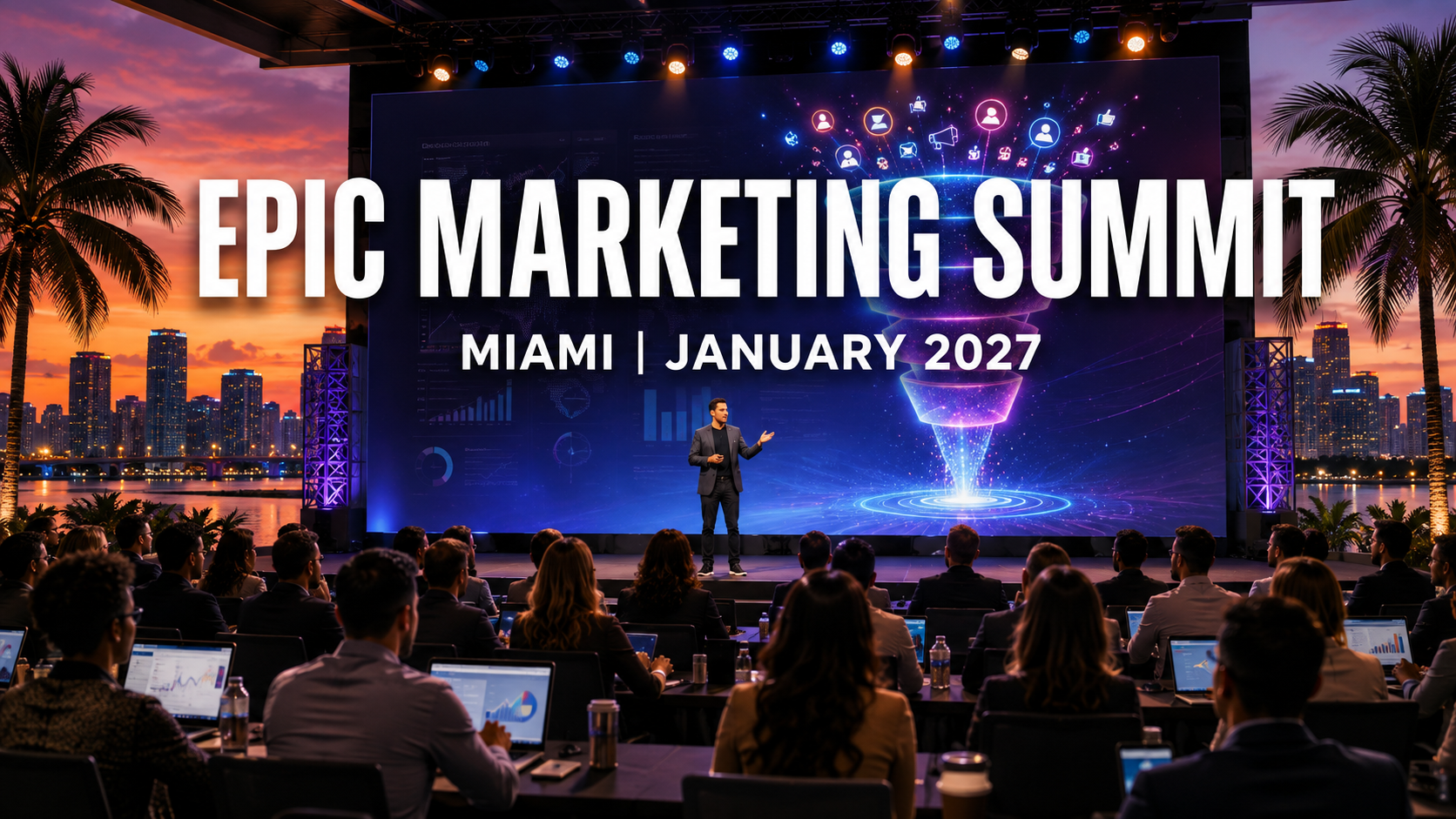
Most business owners I know have a sales process that lives in their head and runs on their own energy. That's not a system. That's a second job.
The Epic Marketing Summit is a 2-day live event in Miami this January where you build a working AI-powered sales funnel and vibe code your own AI app on-site. You don't walk out with notes or a framework you still have to go implement. You walk out with a finished asset. Last year's event sold out, and it's back with a bigger AI focus for January 2027.
It's built for owners who want to turn their sales process into something that keeps running without them. You get hands-on time building, not sitting through theory, and the trainers are people who've actually done the work.
I wasn't there last year and I had major FOMO, because I know a lot of those trainers and none of them were talking theory. I'm going in January, and if you're serious about building leverage into how you sell, I'd like to see you there too. January is closer than it feels. Grab your spot here
Meta Called Its AI Data Centers "Experiments" and Saved $3.9 Billion
What happened: The New York Times reported, and Quartz recapped, that Meta labeled its AI data centers as experimental facilities so it could claim federal research tax credits. Those credits came to about $3.9 billion in 2025, up from $700 million in 2023, and cut roughly 71% of Meta's federal tax bill. The reporting says Meta's own accountants flagged the approach as legally risky. Meta went ahead anyway.
Why it matters to you: The research credit itself is real, and plenty of small companies that build software or improve products never claim it. Meta's reading of the rules is the aggressive part, and it may not survive a challenge.
What to do about it: Ask your accountant whether any work you do qualifies for research credits, and let them decide how far to push it. This isn't tax advice.
Blacking Out a PDF Doesn't Hide It From AI
What happened: A privacy guide from Arpit Tripathi makes a point many people miss. A black box drawn over text in a PDF only covers the picture. The actual characters stay in the file, and a chatbot reads them right back. Black bars, white text, and highlights all leave the data recoverable. His fix is to delete the identifying details before you paste anything, swapping names for placeholders like [CLIENT] and ID numbers for [NUMBER], and keeping each placeholder consistent so the AI can still follow the story.
Why it matters to you: Contracts, client letters, and insurance appeals are exactly what owners paste into chatbots. If the names are still in the file, they went along for the ride.
What to do about it: Test any "redacted" file by selecting all, copying, and pasting into a blank note. If text appears, it isn't redacted. Never paste passwords or API keys at all.
Robots Can Do 74% of Physical Tasks. They Pay Off for 0.3%.
What happened: Anthropic published research on what work robots can do. Robots can technically perform 74% of physical tasks in the US, covering about 34% of working hours, but mostly in controlled places like factories and warehouses. They're cost-competitive for just 0.3% of job tasks today, because the hardware costs far more than labor. At the historical pace of price drops, around 3% a year, reaching 10% of work would take roughly 40 years. Rules and human preferences also block 14% and 25% of tasks.
Why it matters to you: This is a useful reality check on the "robots take over your crew" headlines. Technically possible and worth paying for are very different things.
What to do about it: Be skeptical of any vendor who says robots will replace your staff this year.
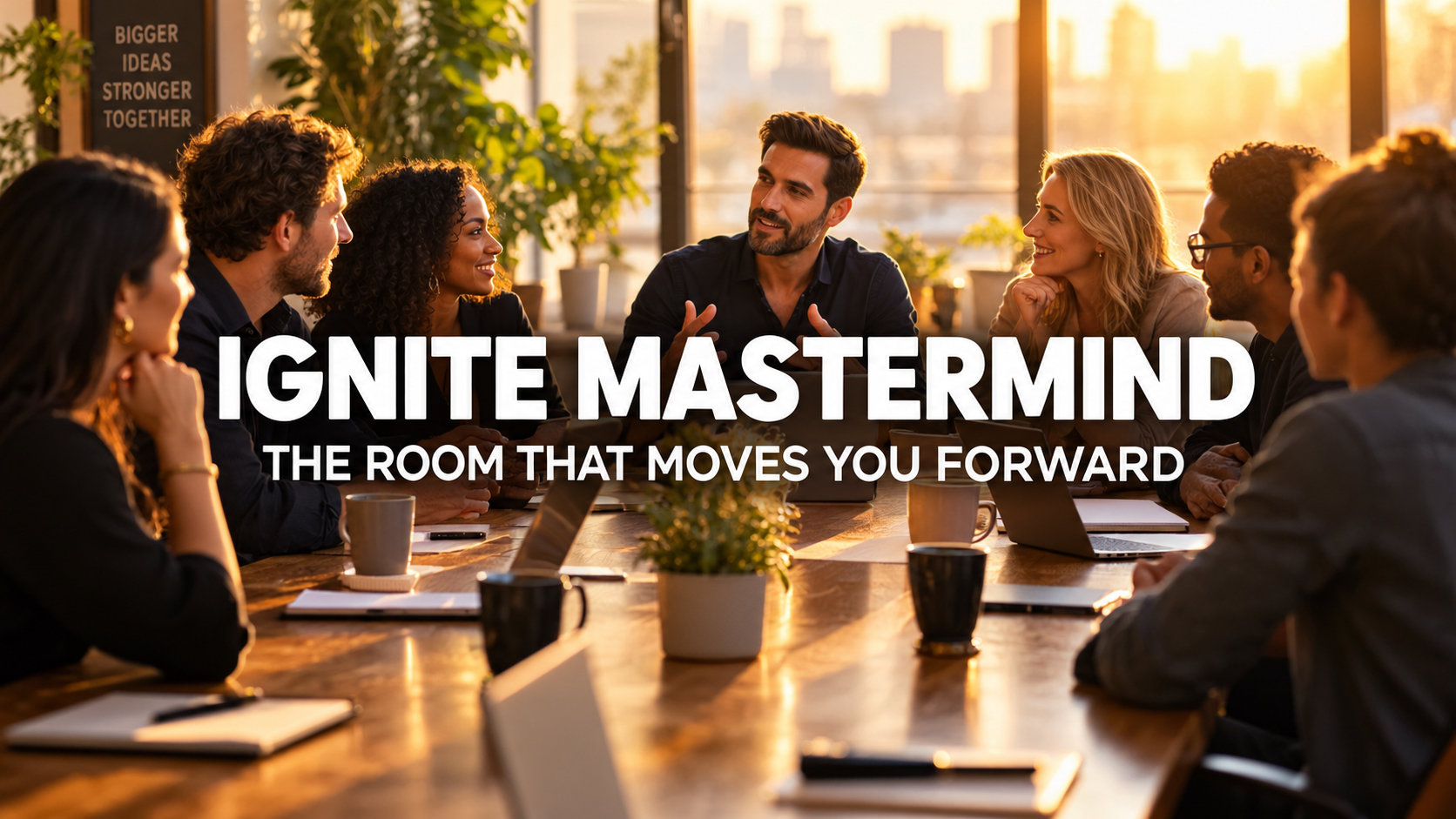
The best business decision I've made wasn't a tool or a tactic. It was a room.
I've been a member of the Ignite Mastermind for over 3 years, and it's been a vital part of how I've grown my business. Some of my closest friends and a few real business partners came directly out of that room.
Ignite is an annual membership for entrepreneurs still under $1 million a year who want structure, tools, and peers to get past that milestone faster. You get 6 to 8 live virtual workshops a year, tickets to 2 in-person multi-day events, and weekly calls with Perry Belcher and his team. There's also an all-in-one marketing software suite that replaces over $5,000 a month in separate tools, plus a peer community built for real partnerships. As my personal bonus, you also get monthly accountability and business development calls with me.
If you're looking for a mastermind to move you to your next milestone, this is where I'd point you. See how Ignite works here
DoorDash Will Now Take Your Order by Text Message
What happened: DoorDash launched a text-message ordering beta on September 30. You text what you're craving, or "order my usual," and it searches local restaurants, sends photo recommendations, and checks out inside the thread with no app needed. It also handles group orders with mixed diets and flags cheaper grocery swaps. It's US only, with a waitlist at doordash.com/text.
Why it matters to you: Customers are getting used to doing everything in a text thread. If your business takes orders, bookings, or questions, they may soon expect to do the same with you.
What to do about it: Ask yourself whether a customer could book or reorder from you by text today.
Almost Nobody Pays for AI, So the Labs Are Chasing Businesses
What happened: TechCrunch laid out the math. As of May 2026, only 2.2% of consumers paid for AI services, averaging $31 a month. AI costs so much to run that even hundreds of millions of paying customers doesn't guarantee a profit. So the big labs have leaned toward enterprise deals, and OpenAI's enterprise bookings have reportedly doubled since July.
Why it matters to you: The money is flowing toward business customers, which likely means more business-focused products, pricing, and sales pitches aimed at you, and possibly less generosity on cheap consumer plans.
What to do about it: Before you sign an annual AI contract, compare it against month-to-month pricing. This market is still moving fast.
The Bottom Line
Strip away the launches and today has one lesson. Capability and access are two different things. Google's best model is locked behind a cybersecurity program, while the most dangerous free model is a download away. Robots can do the work on paper and can't afford the job in practice. Almost nobody is paying for the chatbots, yet the companies selling them are valued like everyone does. Be the person who asks who can actually use it, what it costs, and who checked the claim. That question is cheaper than any tool. Stop the rollercoaster, keep your hands on the bar, and don't buy the ticket until you've seen the ride.
Enjoying the Ride?
If this issue helped, forward it to one person who runs a business and is tired of the AI hype. And if someone forwarded this to you, you can subscribe at stoptheairollercoaster.com to get it every day.
Talk tomorrow,
Mark Shilensky
Follow me personally on Social Media:
Facebook: https://www.facebook.com/MarkShilenskyPage
Instagram: https://www.instagram.com/markashilensky/
Threads: https://www.threads.com/@markashilensky
LinkedIn: https://www.linkedin.com/in/shilensky/
X: https://x.com/markshilensky
TikTok: https://www.tiktok.com/@mark.shilensky
BlueSky: https://bsky.app/profile/markshilensky.bsky.social