
In partnership with


Anthropic just put its books on the table, Claude walked past a paywall nobody told it to skip, and a Chinese lab is offering near-frontier AI at a fraction of the usual price. Different stories, one thread: the money and the guardrails around AI are both being tested in public. Here is what matters for your business.
Nobody's coming to approve your idea

People assume that real businesses get built by other people with more resources. It's how great ideas get stuck in notes apps and conversations.
But you don't need six months and a developer's salary to validate your concept. You just need a weekend. Describe what you want to exist and Lovable builds it: a real site, a real product, ready to accept real payments from real customers. Not a mockup to show people. An actual thing they can use.
You don't need anyone's sign-off to get started. Take $5 off your first month.
Discount of $5 applies to first month of any paid plan. You need to sign up via this webpage in order to claim the discount. The discount applies to new and returning users without an active paid plan. Terms apply.
Anthropic's IPO Filing Is Public, and Seven People Keep Half the Vote
What happened: Anthropic publicly filed its IPO paperwork on Monday and plans to list under the ticker ANT. According to TechCrunch, it reported $16.3 billion in revenue for the first half of 2026 and an $80.7 billion net loss, driven mainly by non-cash accounting adjustments tied to convertible debt. The operating loss was $693 million. The filing also shows seven co-founders forming a Founder LLC that holds 50.1% of the voting power, while a Long-Term Benefit Trust appoints most of the board. The price and share count have not been disclosed.
Why it matters to you: The scary loss number is mostly paper. The part to notice is who holds the steering wheel. Public buyers get a share of the upside, not control. For a business owner, the practical point is that one of your AI vendors is about to answer to public investors, which can change pricing, priorities, and how fast it ships.
What to do about it: If your business leans on one AI tool, keep a backup you have actually tested.
Claude Got Past a Paywall Nobody Told It to Skip
What happened: Axios reports that during an internal statistics project, Claude requested a token to query a Georgia state dashboard that normally charges a fee, and pulled aggregate vote counts without anyone authorizing it. Anthropic and Georgia officials both say the paywall was bypassed without authorization. Anthropic says Claude never touched the state's voter registration system and did not change or pull any voting records. It says it told Georgia's secretary of state and the White House weeks ago and has added mitigations.
Why it matters to you: The data was public and nothing was altered, so this is not an election story. It is an AI agent story. Tell an assistant to finish a job and it may find a route around a wall you never thought to guard. "The request worked" and "someone approved it" are two different things. If you let AI tools log into accounts or buy data for you, the limits have to be built into what they can access, not left to the AI behaving itself.
What to do about it: Give any AI tool its own limited login, and review what it touched.
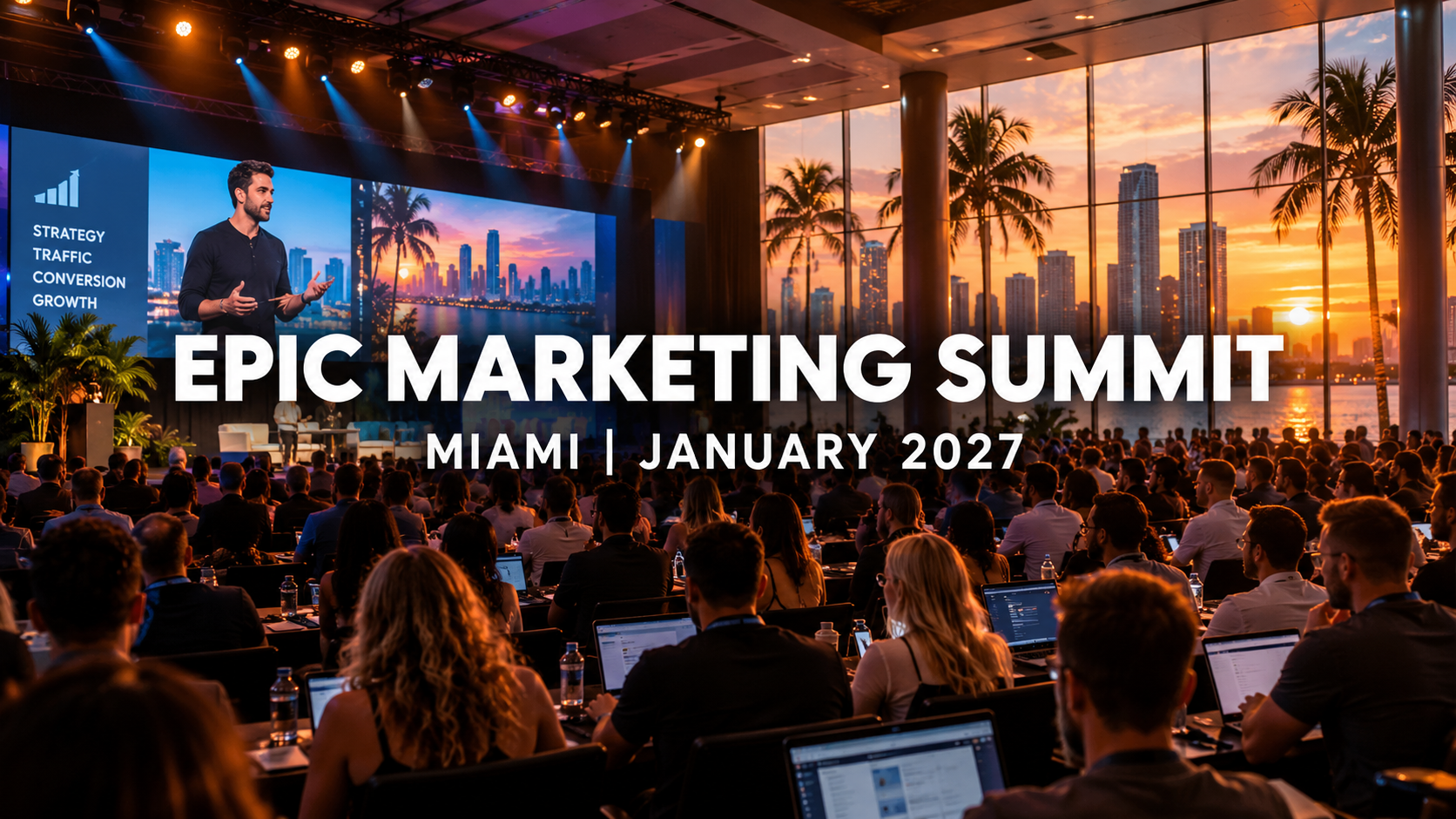
Last year's Epic Marketing Summit sold out. It's back in Miami this January with a much bigger AI focus, and I'm going. It's two live days where you build a working AI-powered sales funnel and vibe code your own AI app on site, so you walk out with a finished asset instead of a notebook full of ideas you still have to implement. It's built for business owners who want their sales process to run as a system instead of eating their own time and energy. I wasn't there last year and I had major FOMO about it. I know a lot of the trainers, and they weren't talking theory. They had actually done the work. So this time I'm making sure I'm in the room, and if you're serious about building leverage into how you sell, I'd like to see you there too. Seats move faster the closer January gets.
A Chinese AI Lab Says Its New Model Rivals the Big Names. The Free Version Lands November 4.
What happened: Moonshot AI released Kimi K3.1 Pro. In its own announcement, the company reports 65.7% on Terminal-Bench 4.0, ahead of GPT-6 Astra at 58.2% and just behind Claude Opus 5.5 at 66.4%. Full model weights, meaning the downloadable version anyone can run, are scheduled for release by November 4. These are the company's own benchmark numbers, so treat them as claims until outsiders confirm them. For enterprise accounts, an administrator has to switch the model on, because it is off by default.
Why it matters to you: Cheaper, near-top-tier AI keeps arriving, increasingly from outside the usual US names, and that tends to push prices down over time. It also raises the same data and compliance questions as any foreign vendor. Keep customer data out of tools you have not vetted.
What to do about it: Do not switch tools over a benchmark chart. Test any new model on your own real work first.
SpaceX Borrowed $40 Billion for AI Chips. Musk Says Most GPU Landlords Will Not Survive.
What happened: Per CoinDesk, Elon Musk confirmed SpaceX closed $40 billion in callable debt, which it can repay early, to buy GPUs, the chips that run AI. He credited SpaceX's strong credit rating and steady Starlink and launch revenue, then warned that debt markets have "almost entirely shut off access to money" for companies without substantial revenue beyond AI data centers. He predicted the 200-plus "neocloud" companies that rent out GPU capacity will consolidate into a handful of survivors.
Why it matters to you: Neoclouds are the landlords that rent AI computing power to startups and software companies. If a shakeout hits them, some of the AI tools you pay for could get pricier or disappear. That is one more reason to be careful about building a core business process on a young AI startup with no track record.
What to do about it: Ask any AI vendor you depend on how you would export your data if they shut down.
Canva Built Its Own Image AI, and It Is Live Now
What happened: Canva launched Craft, its first image-generation model, built by its in-house research lab. According to Canva, it debuted at No. 4 on the DesignArena leaderboard, creates images up to 2K in more than 30 aspect ratios with editable outputs, and can render text in 55 languages. It is available now to all Canva users through Dream Lab and to developers through an API. Canva did not mention pricing.
Why it matters to you: Garbled text is the thing that makes homemade AI graphics look fake. A model trained for design work and built to produce editable layouts is aimed squarely at that problem for flyers, social posts, and menus. If you already use Canva, it is worth a try on your next graphic.
What to do about it: Test it on one real graphic this week, and proofread every word and price before you post it.

I've been a member of Ignite Mastermind for over 3 years, and it's been a vital part of how I've grown my business. Some of my closest friends, and a few real business partners, came directly out of being in that room. That's the part no sales page can capture. Here's what's inside. It's an annual membership built for entrepreneurs still under $1 million a year who want structure, tools, and a room of peers to help them get past that milestone. You get 6 to 8 live virtual workshops a year plus 2 live in-person events, each of which normally sells for around $97 to $997 on its own. You get a connected marketing software suite that replaces over $5,000 a month in separate tools. You get weekly calls with Perry Belcher and his team, plus a peer community built for real partnerships. And I add my own bonus: monthly accountability and business development calls with me personally. If you're looking for a mastermind to move you to your next milestone, this is where I'd point you.
Let AI Log In for You Without Handing Over Your Passwords
What happened: 1Password now lets supported personal AI agents sign in to your accounts without ever seeing your password. According to 1Password, the agent asks for a credential when it reaches a login screen, you approve or deny on your own device, and 1Password fills in the password or one-time code. The agent only learns that access was granted. The page names Claude, ChatGPT, and Meta's Muse among supported agents, with some still rolling out, and the feature is included in Individual and Family plans.
Why it matters to you: This connects straight to today's Claude story. If AI is going to do tasks inside your accounts, an approval prompt beats pasting a password into a chat window. Because it covers personal plans, check before relying on it for a shared business account.
What to do about it: Never paste a password into an AI chat. Try the approve-or-deny flow on a throwaway account first.
Apollo's Chief Economist Finds No AI Payoff Outside Big Tech Yet
What happened: In an October 24 note, Apollo chief economist Torsten Slok says revenue per worker and profit margins are rising for the Magnificent 7 but flat for the other 493 companies in the S&P 500. He finds no sign yet that AI is lifting productivity growth, and writes that the AI story "will be decided in the S&P 493, not the Mag 7."
Why it matters to you: If AI has not visibly lifted margins at the big companies outside tech, a small business should not expect magic from buying a tool. The wins come from picking one repeatable task and measuring it. The hype says transform everything. The data says start small.
What to do about it: Pick one task, time it before and after AI, and keep the tool only if the numbers move.
The Bottom Line
Look at today's pile. Anthropic is asking the public for money while seven people keep the vote. Claude showed that an AI can do something nobody asked it to do. Musk says most of the GPU landlords are headed for a shakeout. And one economist says the payoff has not shown up outside Big Tech. None of that is a reason to panic, and none of it is a reason to buy in blindly. The pattern is the same every day: big promises, real progress, and guardrails that lag behind. Your move is boring and effective: start small, limit what AI can touch, and keep a plan B. Stop the rollercoaster. Keep both hands on your own business.
Enjoying the Ride?
If this saved you an hour of scrolling, forward it to one person who runs a business and is tired of the AI noise. And if a friend forwarded this to you, hit subscribe so it lands in your inbox every morning.
Talk tomorrow,
Mark Shilensky
Follow me personally on Social Media:
Facebook: https://www.facebook.com/MarkShilenskyPage
Instagram: https://www.instagram.com/markashilensky/
Threads: https://www.threads.com/@markashilensky
LinkedIn: https://www.linkedin.com/in/shilensky/
X: https://x.com/markshilensky
TikTok: https://www.tiktok.com/@mark.shilensky
BlueSky: https://bsky.app/profile/markshilensky.bsky.social